



Wisdom Teeth
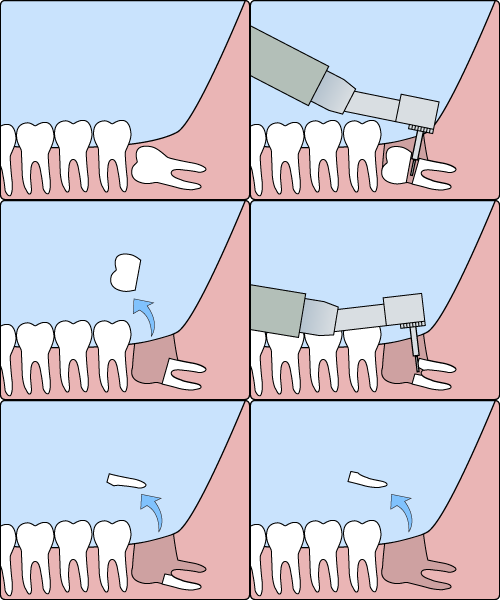
Wisdom teeth are types of molars found in the very back of your mouth. These teeth usually appear in late teens or early twenties but may become impacted (fail to erupt) due to lack of room in the jaw or angle of entry. The most common type of impacted wisdom tooth is “mesial”, meaning that the tooth is angled forward toward the front of your mouth.
When a wisdom tooth is impacted, it may need to be removed. If it is not removed, you may develop gum tenderness, swelling, or even severe pain. Impacted wisdom teeth that are partially or fully erupted tend to be quite difficult to clean and are susceptible to tooth decay, recurring infections, and even gum disease.
Each patient's situation is unique. Your dentist will usually take a panoramic X-ray to determine whether your wisdom teeth will need to be removed. If your dentist recommends removal of your wisdom teeth, it is best to have them removed sooner rather than later.
Wisdom teeth are typically removed in the late teens or early twenties because there is a greater chance that the teeth's roots have not fully formed and the bone surrounding the teeth is less dense. These two factors can make extraction easier, as well as making the recovery time much shorter.
To remove a wisdom tooth, your dentist first needs to numb the area around the tooth with a local anesthetic. Your dentist can use additional medication to safely sedate you during the extraction if you are feeling nervous about the procedure. Since the impacted tooth may still be under the gums and imbedded in your jaw bone, your dentist will need to remove a portion of the covering bone to extract the tooth. To minimize the amount of bone that is removed with the tooth, your dentist will often “section” your wisdom tooth so that each piece can be removed through a small opening in the bone.
Once your wisdom teeth have been extracted, the healing process begins. Healing time varies depending on the degree of difficulty related to the extraction. Your dentist let you know what to expect and will provide instructions for a comfortable, efficient healing process.